
Vinted has become the default place to sell your old clothes in the UK. The app charges sellers no fees, which is a strong selling point, and it is admittedly very satisfying to turn a wardrobe you never wear into money.
The question this article answers is whether it is worth the effort. Over time we have sold £250 or more on Vinted, mainly clothes, but also books and some home items such as a small lamp and some bowls. That has given us a good feel for what the platform does well and where it falls short.
This is a review based mainly on selling, though we buy on Vinted too and I cover that later on. I will look at how much you can realistically make, how the fees and tax work, the parts of the experience that are frustrating, and whether the time you put in is worth what you get back.
What is Vinted?#
Vinted is an online marketplace for buying and selling second-hand items, mostly clothing, shoes and accessories, although also books, homeware, toys and more. The process is: you list an item, a buyer purchases it, you post it out, and once it is confirmed as received the money is released to you.
The main difference to eBay or Depop is that Vinted charges sellers nothing. There is no listing fee, no final value fee and no commission taken off your sale price, so you keep the full amount your item sells for. Instead, Vinted makes its money from the buyer, who pays a Buyer Protection fee on top of the item price at checkout.
I suspect this is a large part of why the platform has grown so quickly. As a seller, seeing the full asking price arrive in your bank account feels better than watching a marketplace take a cut off the top.
How much can you make on Vinted?#
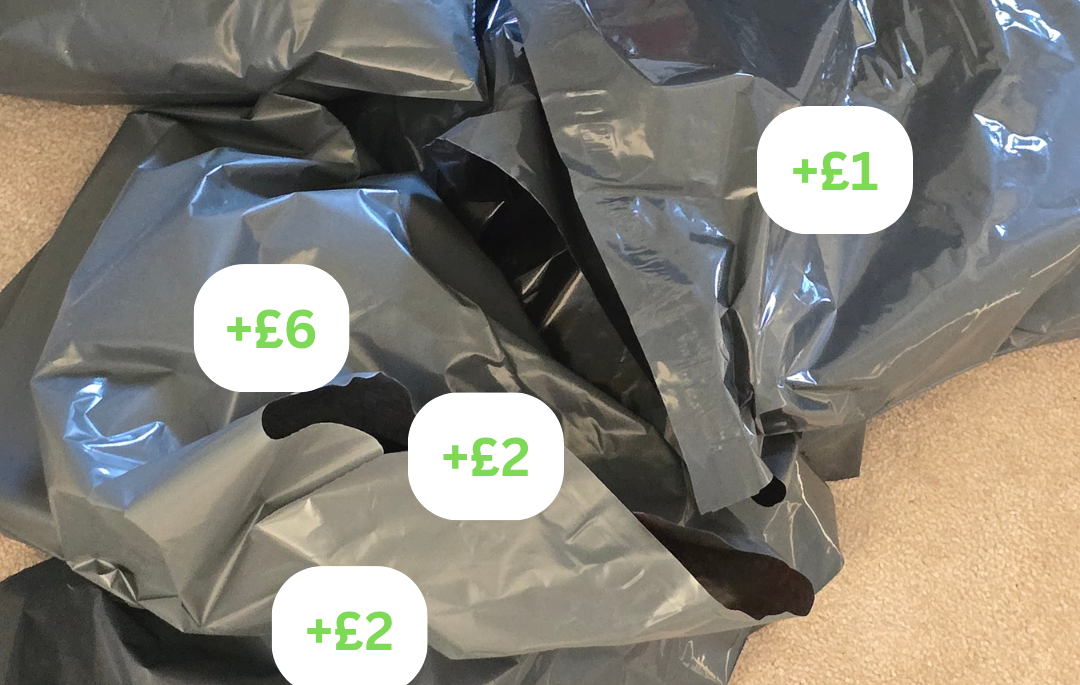
We have sold over £250 worth of items on Vinted. That has come from a mix of clothes we no longer wear, a few books, and some home items including a small lamp and some bowls. None of it was bought to resell. It was all our own things clearing out of cupboards.
This happened gradually rather than quickly. Some items sell within hours, others sit for months and eventually sell for a couple of pounds, if they sell at all. So while £250 is a nice amount for things that were otherwise gathering dust, it is not money you can rely on or predict.
This is the most important expectation to set. Vinted should not be seen as a serious money earner. It is a way to recover a bit of value from clothes you would otherwise bin, donate, or leave in a drawer. Seen that way it is very good. Seen as a way to make a meaningful monthly income, you will be disappointed by the effort involved for what you get.
Tip
Items get the most views in the first day or two after listing, then get buried as newer items appear. Vinted prioritises new listings, so price sensibly from the start rather than sitting on an optimistic price.
How do Vinted's fees work?#
This is one of the areas where Vinted does well.
Sellers pay nothing. There is no final value fee, no commission and no payment processing deduction on a standard sale. You keep the full amount the buyer pays for your item.
The buyer pays the fees instead. At checkout the buyer pays a Buyer Protection fee on top of your price. In the UK this seems to be roughly £0.70 plus around 5% of the item value, although the exact rate varies a little depending on the price. This covers the buyer for problems such as a parcel going missing with Vinted's integrated shipping, or an item arriving significantly different from its description.
Getting paid is straightforward. Once the buyer confirms receipt, or the order completes automatically a couple of days after delivery, the money is released to your Vinted wallet. From there you transfer it to your bank account, which usually takes a few working days to arrive. There is no withdrawal fee and no minimum amount required to cash out.
Do you pay tax on Vinted sales?#
This is asked quite a lot, thanks to headlines about a so-called Vinted tax. For most sellers, you don’t need to consider it as selling your own used belongings is not taxable.
If you are clearing out your own wardrobe, selling things you originally bought to use yourself, usually for less than you paid, you generally owe no tax at all, no matter how much it adds up to. This applies to the majority of Vinted sellers, us included. It is tax free because it is your own property, not a business.
From my research, tax only comes in if you are trading, which means buying items specifically to resell for profit, or making things to sell. In that case a £1,000 trading allowance applies. If your total sales, not just your profit, are under £1,000 in the tax year, you do not need to tell HMRC anything. If you go over £1,000 as a trader, you would need to register for Self Assessment and pay tax on the profit.
Clickbait headlines over the years haven’t helped. Online platforms now have to report seller information to HMRC once you pass either 30 items sold or around £1,700 in sales in a year. But this is only data sharing. Being reported does not mean you owe tax. If you are only selling your own second-hand possessions, you can go past that threshold and still owe nothing.
Listing items on Vinted#
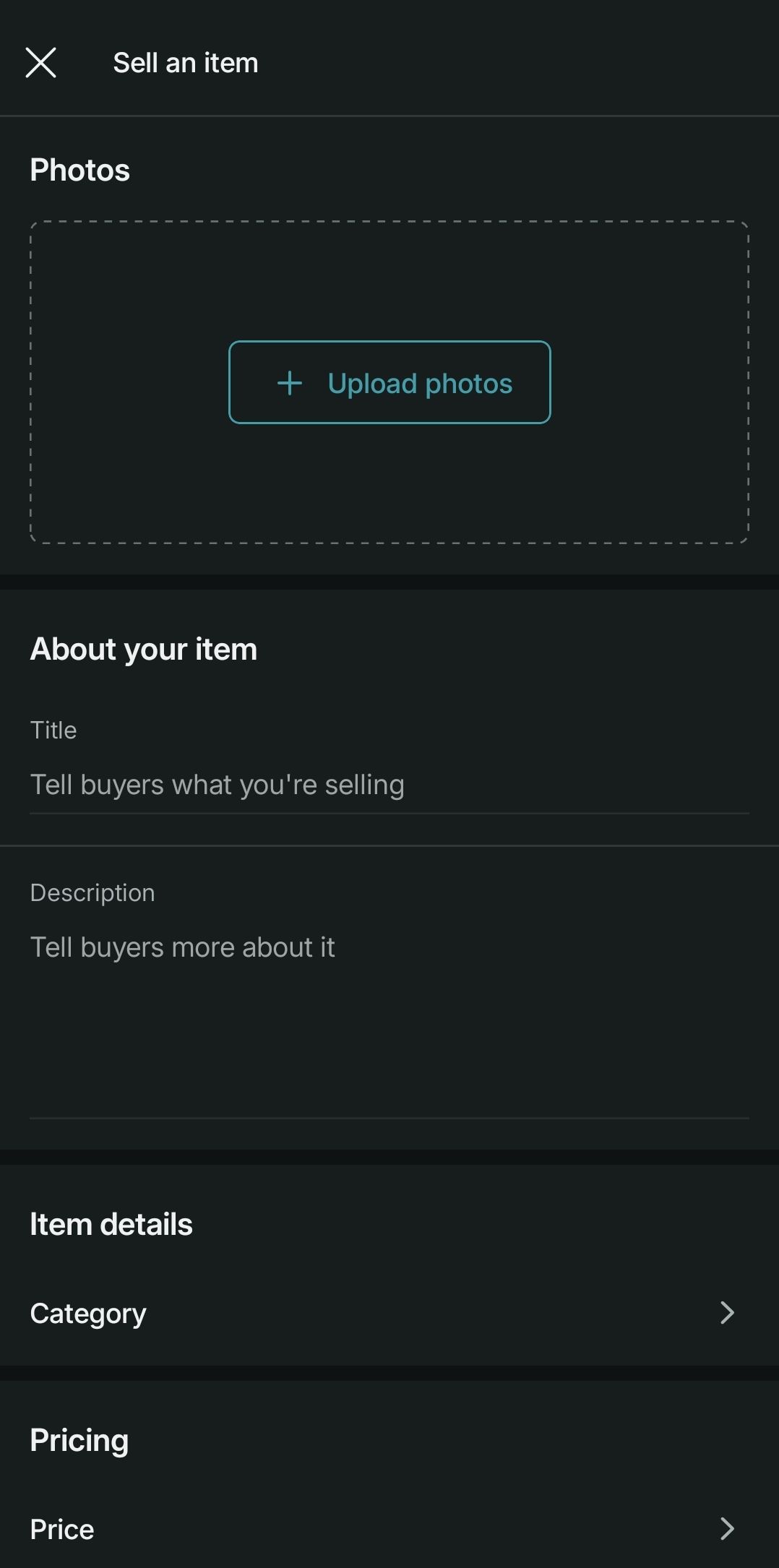
Listing an item on Vinted is very easy. You take a few photos, add a description, choose a category and condition, and set a price. The app suggests a price based on similar items that have sold, which takes a lot of the guesswork out of it when you are starting out.
The process is quick enough that you can list a small pile of items in one sitting without it becoming a chore. For a platform that costs sellers nothing, the listing experience is one of the things it clearly gets right.
Posting and shipping#
Generating a postage label is easy. Once an item sells, the app produces the label you need to send it.
The problem is everything around that. If you are posting several items at once through different couriers, the app becomes confusing. There is no sorting option to group your outgoing parcels by courier, so it is easy to lose track of what is going where.
You will also sometimes need to print labels at home rather than have them scanned at a drop-off. If you don’t have a printer, you should disable InPost Home Delivery as this seems to always need a printer.
None of this stops you selling, but it is friction. When you are posting out several low value items, that friction takes away from the easy money feeling.
The app's limitations as a seller#
The bigger frustration is how basic the platform is once you are managing more than a few sales.
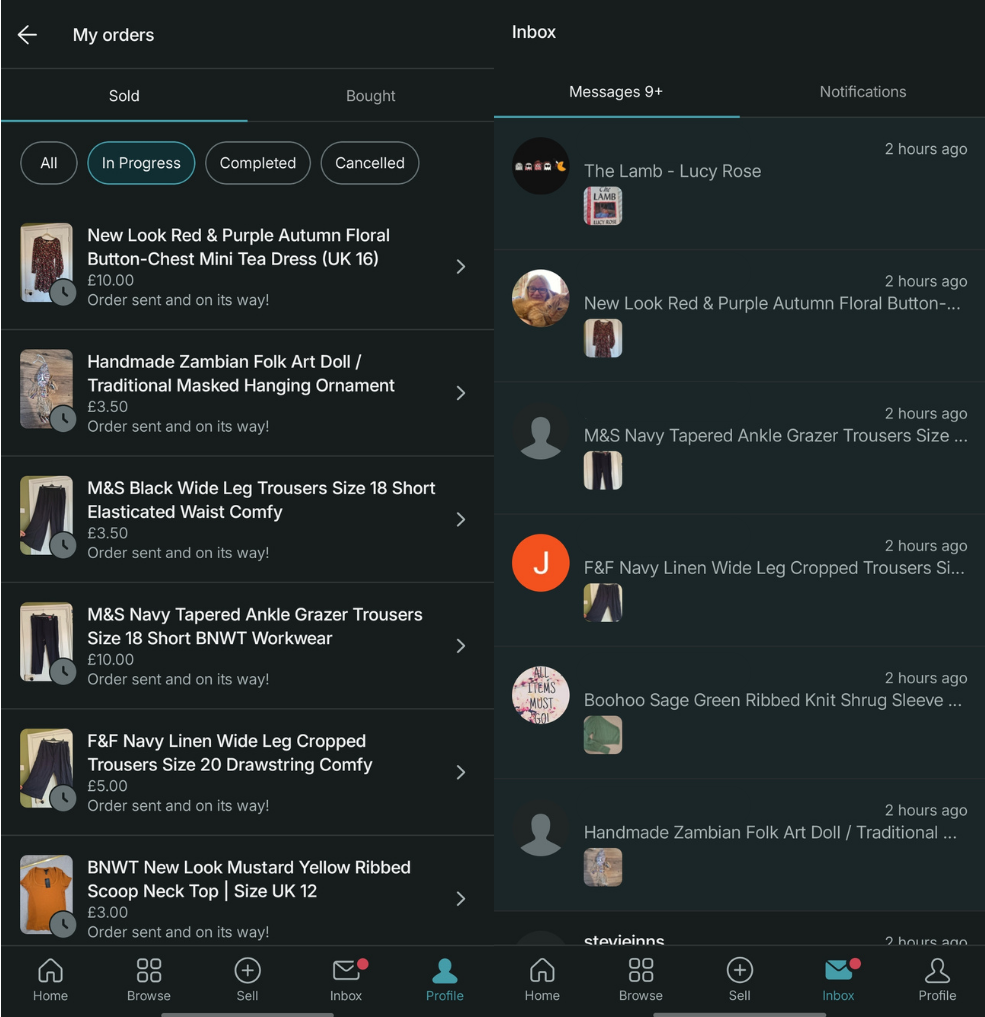
Almost everything happens through a message style inbox, which becomes cumbersome to work through. As a seller there are barely any filters. You can filter by order status, but not by delivery courier, or by whether you have accepted an offer on something. When you have several items in various stages of selling and posting, finding the right conversation or order becomes inefficient.
There is also a lack of the features you would expect from a larger marketplace. There is no option to auto-accept offers above a certain amount, for instance, so every low offer has to be dealt with by hand. For a platform this size it feels underdeveloped, and it makes getting through your admin slower than it should be.
Difficult buyers and poor support#
Most people on Vinted are lovely, and it is worth saying that clearly. The majority of sales are smooth and pleasant. However, when things go wrong the platform does not give sellers much to work with, and this is where my main reservations are.
Two of our own experiences show the problem. We sold a top and the buyer reported a stain, which was tiny and already shown in the listing photo. We also sold a very cheap blanket for £1, and the buyer never collected it, so it is now being returned to us, which creates admin for the sake of a single pound.
The worst example was when we accidentally sent the wrong item to a buyer, a white blouse that was meant for someone else. There was no way built into the platform to simply fix the mistake. Until recently you could not even pay for the buyer's return postage, although that seems to have changed, at least in some cases. So we had to wait for them to open a dispute, refund them, and then relist the item for them to buy again. Sellers should have more flexibility to correct honest mistakes like this.
When you do contact customer services, the replies often seem automated or AI generated, and rarely resolve the actual problem. This leads to one firm piece of advice. I would not sell anything of much value on Vinted. For a £30 or more item, the poor support and lack of seller protection is not worth the risk if something goes wrong. Keep it to lower value items, where a problem is an annoyance rather than a real loss.
Vinted feedback and reviews#
The feedback on Vinted should mostly be ignored, because there are very few situations where anyone can leave anything negative.
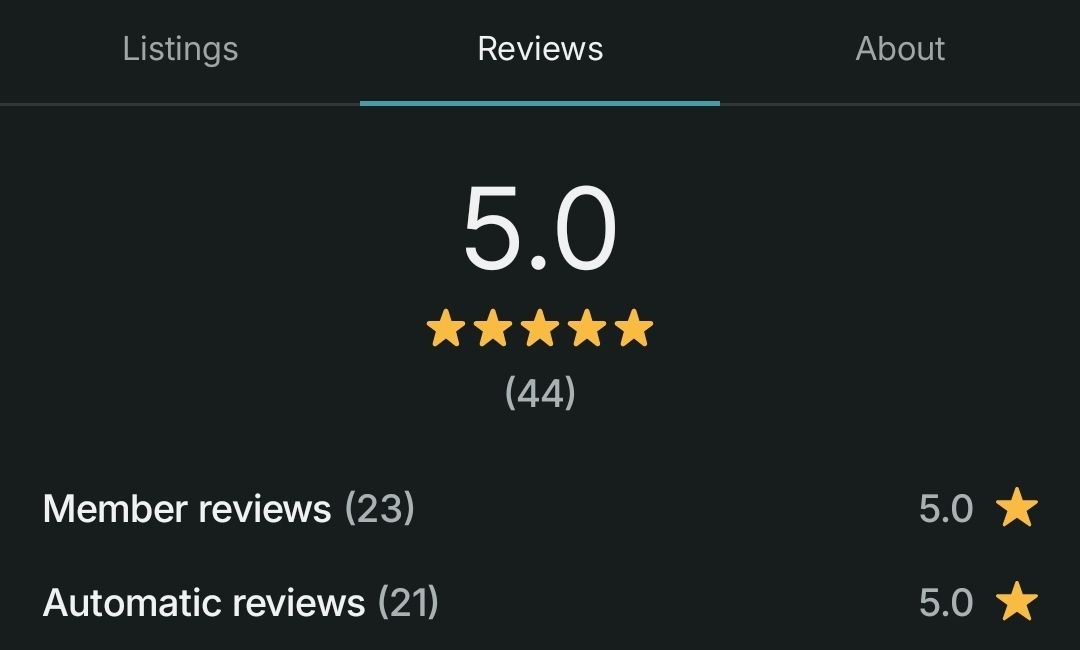
Feedback can only be left between members who have completed a trade, and only within a few days of the order being completed. Many of the problem situations never reach a completed state, so no feedback ever gets left, and the ratings you see end up skewed positive.
A few examples of how the rules quietly protect people from ever being reviewed:
- If a buyer never collects their order, there is no completed sale, so no negative feedback can be left against them. They face no consequence for wasting your time.
- If a buyer opens an unfair dispute and you refund them, you generally cannot leave feedback either. As it is rarely worth fighting over an item of a few pounds, the platform effectively pushes you to just refund and move on, which means the behaviour never shows up on their profile.
Here is a rough guide to when feedback can actually be left:
| Situation | Can feedback be left? | In practice |
|---|---|---|
| Order completes normally | Yes, by both buyer and seller, within a few days of completion | The only case where honest feedback reliably happens |
| Buyer never collects the item | No, the trade never completes | Buyer faces no consequence, and the item returns to you |
| Order cancelled by either party | Automatic negative feedback is generated | Both sides can agree to edit or remove it |
| Item not shipped on time by the seller | Automatic negative feedback against the seller | One of the few automatic penalties, and it falls on sellers |
| Buyer opens a dispute and is refunded | No | The platform pushes you to refund and move on |
The point is not to put much weight on a seller's or a buyer's high rating, because the system is set up so that the negatives rarely get recorded. Judge items and sellers on their photos, descriptions and your own questions instead.
Buying on Vinted#
We buy on Vinted as well as sell, and as a buyer the experience is good, with a few caveats.
A lot of our buying comes from trying to avoid new clothes to be more eco. Buying second-hand saves money too, which is a bonus. We use it for everyday clothes at a lower price than buying new, as well as occasion wear we will only need for one event.
The value is the main draw. There is a huge choice of items, and you can usually find what you are after for much lower than the retail price. Most sellers are lovely and the orders arrive without any problem.
The caveats are similar to the ones you meet as a seller. Some sellers are slow to post or go quiet after you have bought, so an order can take a while to arrive. You also have to rely on the seller being honest in the description. We bought a top that turned out to be so thin you could see everything underneath, which was not mentioned in the listing. When we raised it, the seller said we should have asked whether it was see-through. Buyer Protection covers items that are significantly not as described, but for a cheap item it is often not worth the hassle of a dispute, in the same way it is not worth it as a seller.
Tip
Check the measurements and look closely at the photos before you buy, and ask the seller a question if anything is unclear. It is easier to sort out a concern before you pay than to raise a dispute afterwards.
Where Vinted is at its best#
For all my gripes as a seller, there is one use case where Vinted is excellent, which is buying items you will only use a handful of times.
An example from our own life. We are going to an Indian wedding, and we have bought our Indian attire from Vinted rather than new. Buying new would be a waste for something worn once. On Vinted we could buy it second-hand at a lower cost, and then resell it afterwards to recover most of what we spent. That buy, use and resell loop is where the platform is at its best, and it applies to all sorts of one-off needs such as formalwear, fancy dress, maternity clothes and children's clothes they grow out of quickly.
Used this way, Vinted is not really about earning money at all. It is about spending far less on things you would otherwise overpay for new.
Tips for selling on Vinted
A few things I would pass on if you are going to give it a go.
- Price to sell in the first day or two, as that is when your listing gets the most views before it is buried by newer items.
- Photograph any flaws clearly and mention them in the description, though as our stain complaint shows, this does not fully protect you from a chancer.
- Keep to lower value items, and save anything genuinely valuable for a platform with better seller protection.
- Do not take the feedback scores too seriously, yours or anyone else's.
- Treat the whole thing as decluttering rather than earning, as you will enjoy it far more if any money is a bonus.
So is Vinted worth using?#
Vinted is worth it, with realistic expectations. As a free and easy way to clear out your wardrobe, recover a bit of money and stop wearable clothes going to waste, it is very good, and most of the people you deal with are lovely. The listing process is quick, sellers pay no fees, and for most people selling their own second-hand things it is completely tax free.
The limitations are the app is basic and inefficient once you are managing more than a few sales, the posting process can be a faff, support is poor when things go wrong, and the feedback system is too weak to trust. These limitations are why I would keep Vinted to lower value items and treat it as a declutter with a bonus rather than a side hustle.
It is not a serious earner for the effort you have to put in, but it is a useful app if you know what you are getting into. For clearing out clothes and buying occasion wear you will only need once, it's a great basic platform to consider.